Lotus effect on wood: a new protection for outdoor surfaces

What is meant by the lotus effect applied to wood?

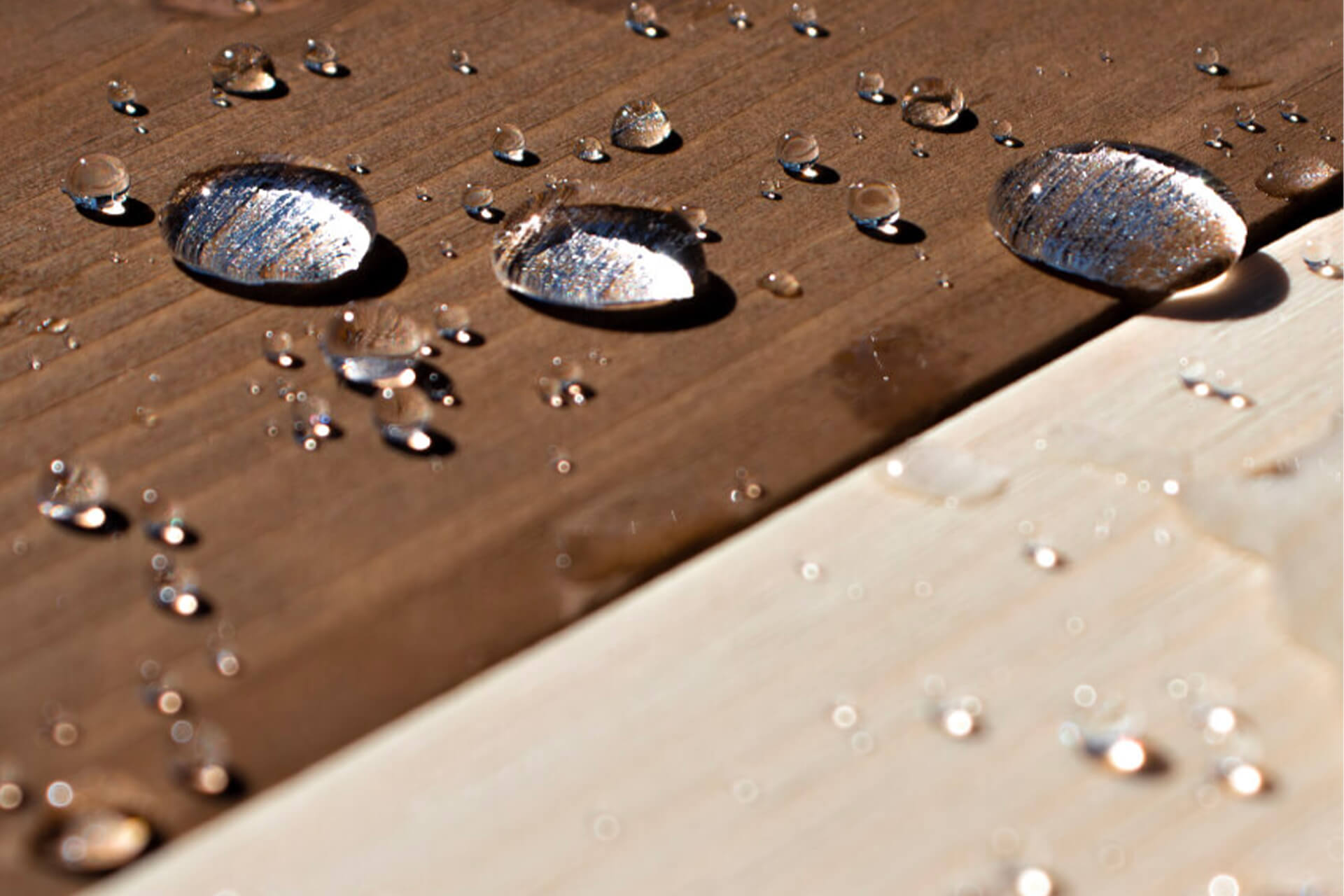
The lotus effect describes a surface’s ability to repel water, causing it to form small droplets that roll off easily. When applied to wood, this principle helps protect outdoor items, allowing the substrate to remain drier even in the presence of rain, humidity, and standing water. Those familiar with botany will recognise what the “lotus effect” is. The leaves of the lotus plant are in fact known for being extremely water-repellent: when they come into contact with water, it forms tiny spherical droplets that slide off, leaving the surface completely dry. This remarkable super-hydrophobic property is due to micro- and nano-scale surface structures on the leaf, combined with a waxy layer.

EL 59: Eureka Colour’s superhydrophobic treatment

Imagine the benefits of transferring this property to a wooden surface. Thanks to the application of the innovative EL 59 product, this question finds a practical answer. EL 59 is a one-component product developed to protect wood exposed outdoors. It penetrates deeply into the wood fibres and, once dry, creates a super-hydrophobic and oleophobic barrier that prevents both water and oil from adhering. The appearance of the wood remains raw and natural. If a lotus effect in different colours is desired, specific colourants from the IW 159 line can be applied before the EL 59 protective treatment. The resulting protection is long-lasting and can be easily restored through a new application of EL 59.

The practical benefits of wood treatment for outdoor use